Chaos Test Kafka Without Breaking Production
Simulate broker failures, latency, and corrupted messages without breaking production. Chaos test Kafka with Conduktor's interceptors.

Production environments are unpredictable. Traffic bursts. Infrastructure struggles to scale. Latency spikes when dependencies fail.
Downtime costs the Global 2000 up to $400 billion annually. Enterprises need to prepare their infrastructure before failures happen.
Kafka is a resilient messaging broker by design, which makes simulating failures difficult. Many organizations focus on functionality without testing reliability under pressure.
Conduktor Gateway solves this by injecting failures at the proxy layer while keeping your Kafka cluster stable.
How Chaos Testing Works With Conduktor
Chaos testing introduces controlled failures to verify system resilience. In Kafka, this means simulating errors when applications read or write messages.
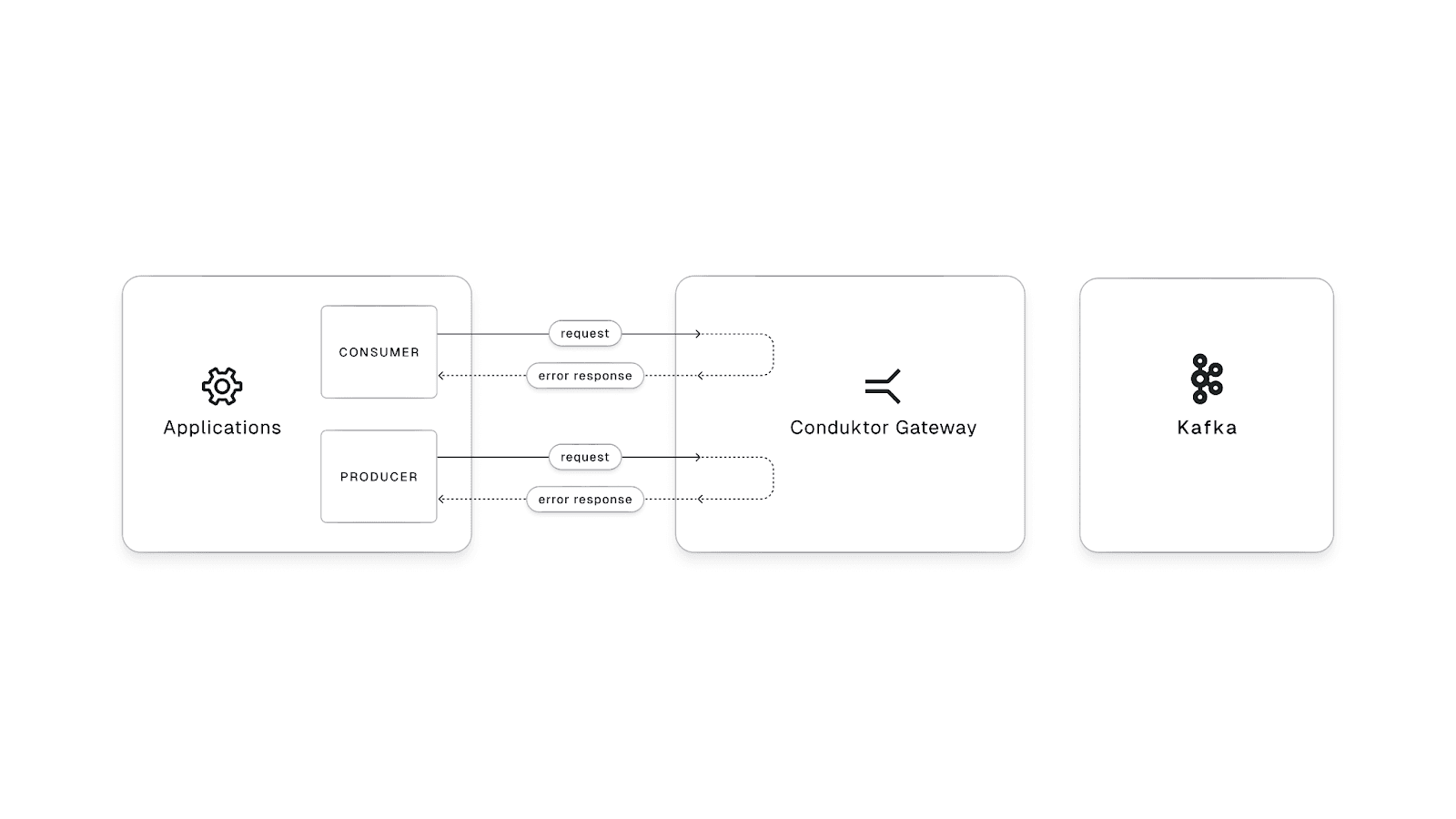
Gateway proxies read and write requests, responding with specific Kafka error codes that mimic real failure scenarios. Your application faces realistic failures. Your Kafka cluster stays untouched.
Why Chaos Test Infrastructure
Modern data stacks combine multiple technologies: Kafka for ingestion, Flink for processing, Pinot for analytics, PostgreSQL for transactions, plus connectors. These interactions create unexpected dependencies and potential failure points.
The worst time to discover these relationships is during a crisis.
Chaos testing provides:
Vulnerability discovery: Testing components to failure uncovers weaknesses and simplifies overly complicated dependencies.
Operational readiness: Teams practicing incident response in safe environments improve their confidence and skills before real events.
Compliance evidence: Documented resilience testing demonstrates due diligence to auditors and regulators.
Chaos Engineering Best Practices
Integrate Into CI/CD
Ad hoc testing isn't thorough enough. Chaos testing should be part of development workflows, running continuously as systems evolve.
Run Game Day Drills
Game days are team-wide drills simulating failures. Focus on a single realistic scenario. Include observers to document events. Debrief afterward to assess effectiveness.
Test Single Points of Failure
Identify critical dependencies, business-critical services (like checkout), and systems with elevated privileges. Simulate outages, latency, and traffic bursts to validate recovery processes.
Failure Scenarios You Can Simulate
Conduktor Gateway's interceptors simulate various Kafka failure modes:
| Interceptor | What It Tests |
|---|---|
| Broken brokers | Periodic broker-client connection errors |
| Duplicate messages | Idempotency handling (e.g., duplicate payment transactions) |
| Invalid schema ID | Consumer behavior with malformed records |
| Latency | Response to network or broker delays |
| Leader election errors | Partition leader failover handling |
| Message corruption | Response to corrupted or malformed messages |
| Slow brokers | Behavior under broker latency |
| Slow producers/consumers | Behavior with latent produce and fetch requests |
Case Study: Retail Peak Season
A leading US sports retailer earns nearly $10 billion during the week from Thanksgiving through Cyber Monday—close to 70% of annual revenue.
Any outage during this period has massive impact. Engineers use Conduktor to simulate broker instability and latency at the Kafka layer before peak season. Chaos engineering protects their most critical revenue period.
Build Resilience Into Your Stack
As data infrastructure becomes more complex and business-critical, testing failure responses before production incidents is essential.
Conduktor makes chaos testing practical: realistic failure scenarios without destabilizing production. Build resilience into your data stack from the start.