How to Share Kafka Data with External Partners Without a Second Cluster
Share real-time Kafka data with partners without replication or DMZ clusters. Conduktor securely encrypts, isolates, and audits external data access.


Organizations regularly need to share Kafka data with external partners: marketing agencies building audiences, supply chain partners needing real-time updates, financial institutions running credit checks, or regulators requiring audit trails.
The standard approach is painful. No security team wants partners connecting directly to internal Kafka. So you end up building a second cluster.
Why a Dedicated Partner Cluster Creates More Problems
The typical solution looks like this: spin up an external Kafka cluster in a DMZ, then replicate data from your internal cluster to it. Partners connect to the external cluster.
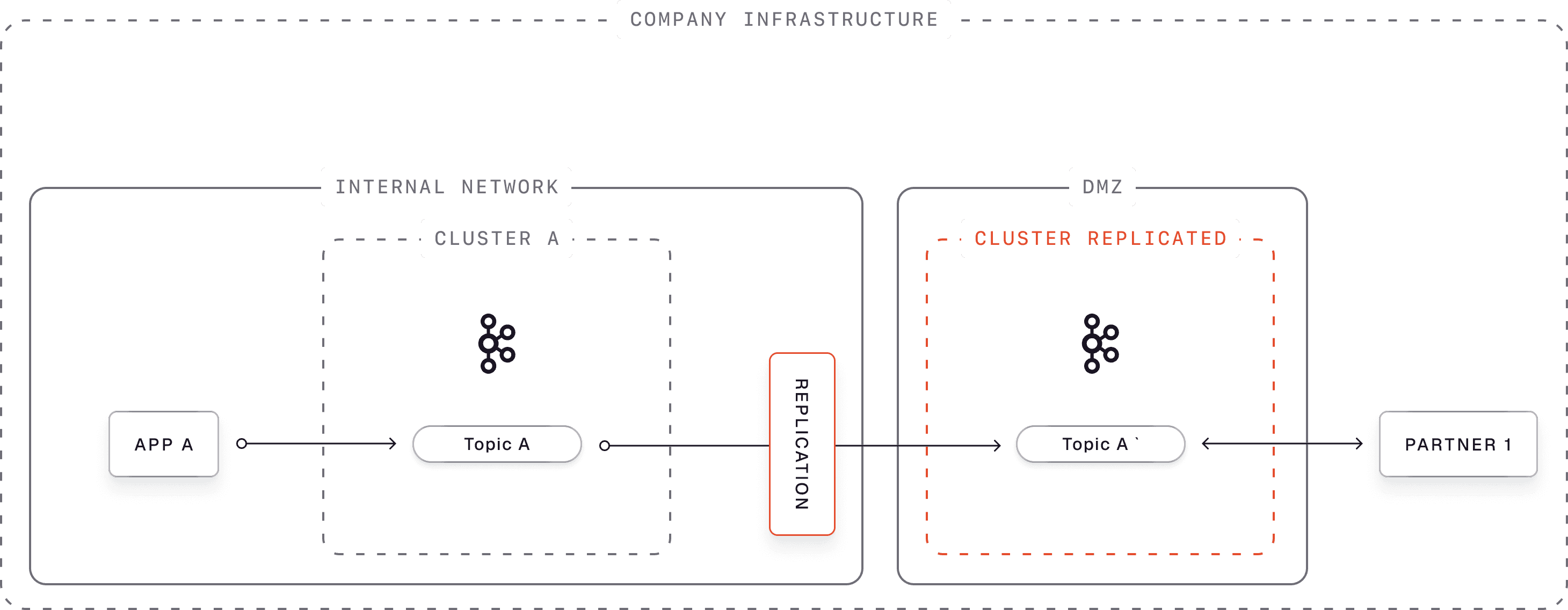
This creates real problems:
- Additional infrastructure costs: You're running and maintaining a second Kafka cluster just for partners
- Data replication complexity: Moving data between clusters blurs the source of truth and adds operational burden
- Encryption overhead: Securing data for external sharing requires custom encryption/decryption pipelines
- Audit gaps: Tracking which partner applications access what data becomes difficult
- Metadata leakage: Internal naming conventions and metadata get exposed to partners
A Single Cluster Approach with Conduktor Gateway
Conduktor Gateway eliminates the need for a dedicated partner cluster. Partners connect to Gateway, which sits in the DMZ and proxies requests to your internal Kafka cluster.
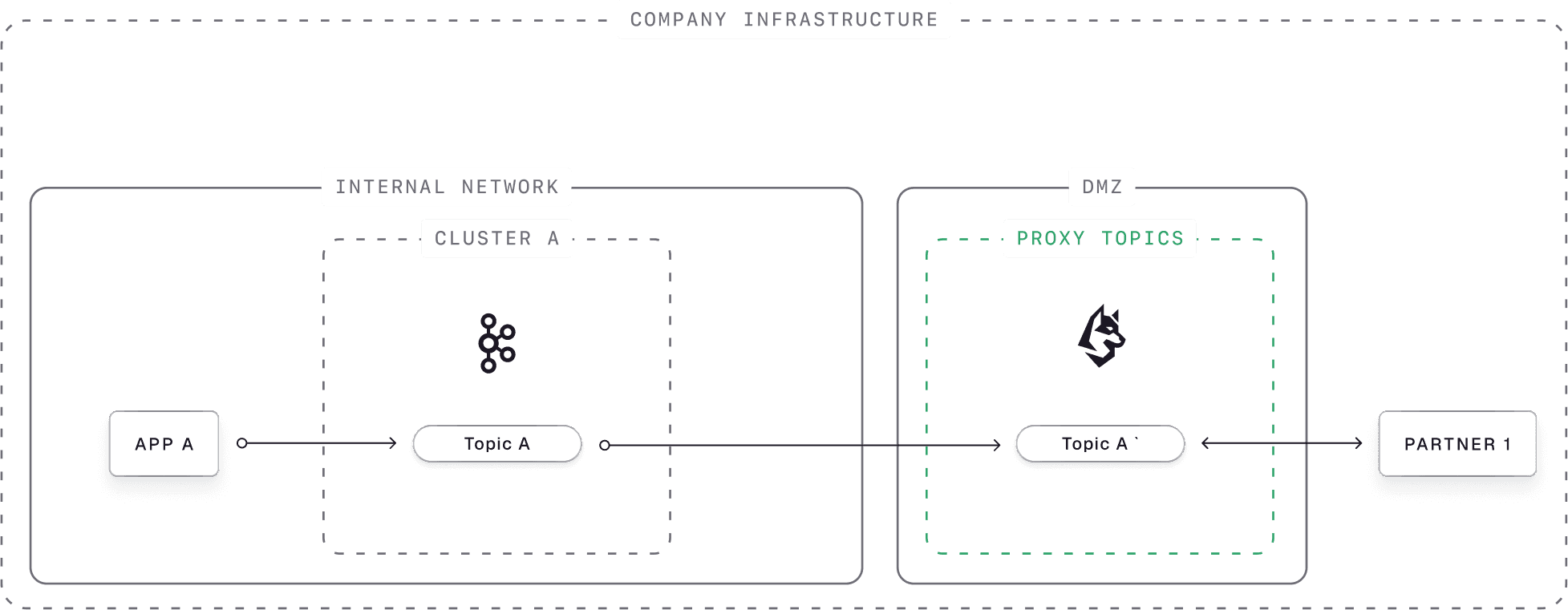
This approach solves each problem directly:
- No replication: Gateway forwards produce/consume requests to your existing cluster. One source of truth.
- Built-in encryption: Data is encrypted to required standards as it passes through Gateway. No application changes needed.
- Partner isolation: Each partner gets their own tenant. They only see topics explicitly shared with them via a single API call.
- Clear audit trail: Every message is tagged with the partner identity. You know exactly who sent or received what.
If you're dealing with partner data sharing challenges, book a demo to see how this works in practice.
Download the one-page summary (PDF).