80% of Enterprise Data Sits Unused. Real-Time Activation Changes That.
Most enterprise data never drives a decision. Real-time data activation transforms idle data into competitive advantage.


Data streaming isn't about collecting more data. It's about making smarter use of what you already have.
Too many organizations build complex infrastructures but fail to extract value. Without high-quality, real-time data, AI models fail, decisions lag, and businesses miss critical opportunities. Scaling isn't about storage. It's about activating the right data at the right time.
The Data Maturity Curve: From Collection to Revenue
Every data infrastructure follows a maturity curve, evolving from raw data collection to a system that drives growth.
This is the first article in the series "From Data Streams to Revenue Streams." We start with the Create stage, the foundation for turning data into business value:
- Create: Unlocking Hidden Value. Data is only valuable if it drives action. Real-time activation turns passive data into business intelligence.
- Scale: Quality Over Quantity. Growth isn't about storing more. It's about accessing high-quality, real-time data when it matters. Coming soon.
- Monetize: Turn Data Into Revenue. First-party data is the future. Companies that own and control their data will dominate their industries. Coming soon.
Most Enterprise Data Never Gets Used
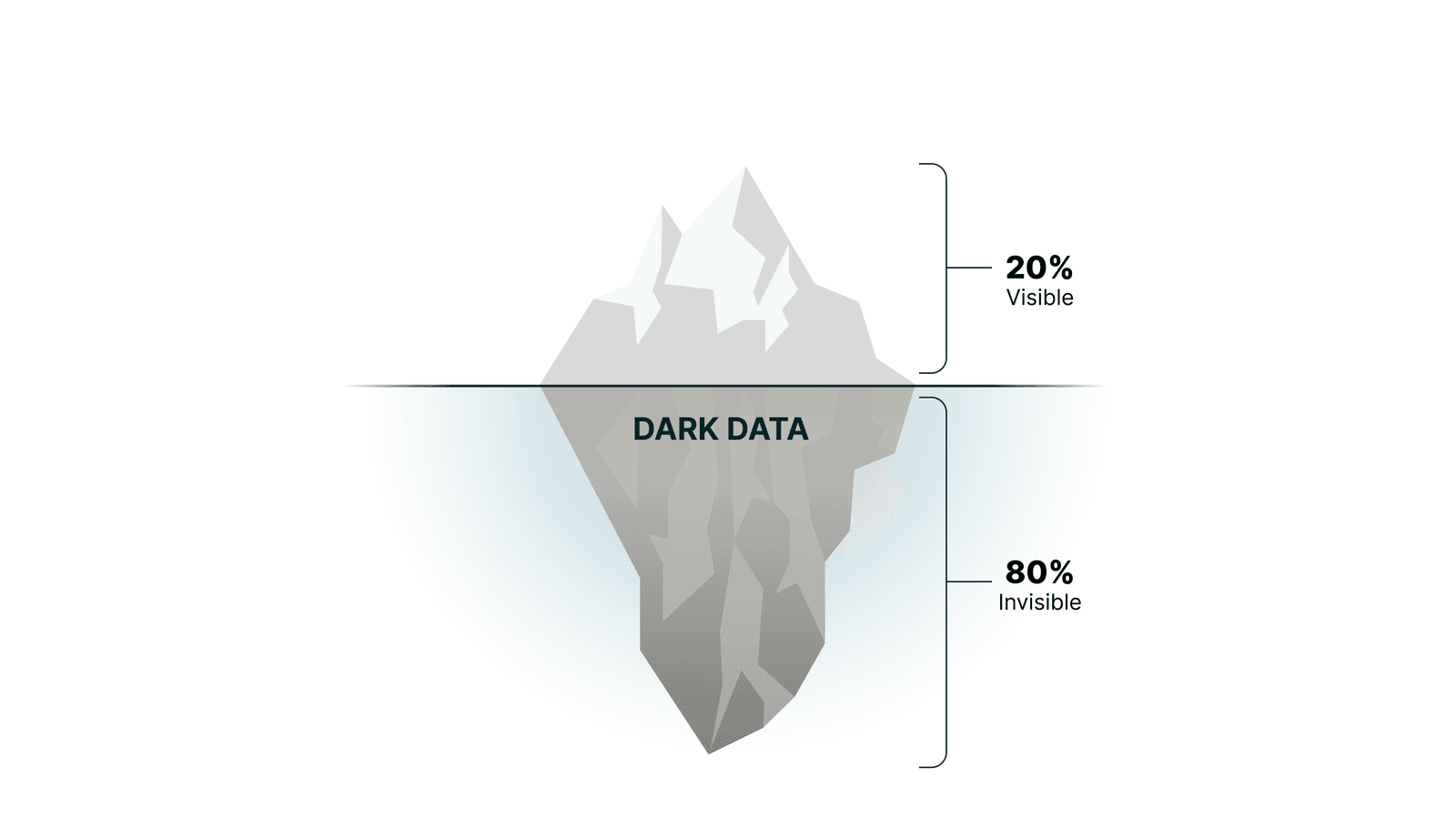
Data has zero value until it's used. Most enterprises sit on mountains of data they never touch. Studies suggest companies only use about 20% of the data they collect. That means 80% of what you're storing is digital landfill: wasted storage, wasted compute, wasted potential.
If your data isn't actively driving business decisions or automated processes, it's not an asset. It's a liability. Collecting data with no strategy to use it is like stockpiling spare parts with no blueprint. Worse, stale data leads to bad decisions.
The best organizations don't just collect data. They activate it in real-time.
Batch Processing Cannot Keep Up
The world isn't running on neatly structured, pre-processed datasets anymore. Data is generated at an unrelenting pace. Most organizations are drowning in raw, unstructured, and underutilized data, or worse, losing it altogether.
Dark Data: The 80% You're Ignoring
Dark data is hidden, unstructured, and siloed information that sits idle. Never analyzed, governed, or leveraged for decision-making. Whether buried in legacy systems, scattered across teams, or locked in machine logs, it's wasted potential. Worse, it creates redundancy, inefficiency, and compliance risks.
Why Traditional Data Processing Fails at Scale
Data Moves Faster Than Batch Systems Can Handle
Batch processing is too slow. Systems choke on the firehose of real-time data, dumping it into storage without extracting value. The result: outdated insights, missed opportunities, and reactive decision-making.
Unstructured Data Gets Lost
Your most valuable data (Slack messages, IoT streams, event logs, real-time customer interactions) doesn't fit into structured databases. If you can't process and govern it in motion, you lose critical insights before they reach your dashboards.
Data Silos Destroy Visibility
Every team, application, and system has its own version of the truth. Without a real-time streaming backbone, you're stuck with duplicate data, inconsistencies, and blind spots.
Governance Gaps Create Compliance Risk
Data privacy laws are tightening. You're collecting sensitive data without real-time governance. If your PII, financial transactions, or IoT telemetry isn't secured as it moves, you're one breach away from a compliance nightmare.
Real-Time Data Drives Immediate Business Value
The era of batch processing and historical reporting as your primary approach is over. Winning companies aren't waiting to analyze last quarter's numbers. They're making decisions as events happen. The value of data decays rapidly if not used in real time.
Industries like finance, e-commerce, and logistics don't tolerate delays:
- Banks detect fraud in real time, preventing losses instead of reacting after the fact.
- Retailers optimize pricing instantly based on live demand, not last week's trends.
- Logistics companies adjust routes on the fly due to weather, traffic, or fuel prices.
Real-Time Data Makes AI Actually Work
AI-driven organizations don't train models on month-old batch reports. They need fresh, clean, exclusive data in real time. The more up-to-date and high-quality the data, the smarter the AI.
Garbage in, garbage out. AI is only as good as the data you feed it. If you want AI to be a competitive advantage, you need streaming, real-time, actionable data.
More on this topic in Part 2: Scaling Data the Right Way.
Infrastructure Without Outcomes Is Just Complexity
Many organizations get lost in the technical side of data streaming. They build a Kafka-based "central nervous system" that looks great on a whiteboard but fails to create real business outcomes.
If all your data is doing is moving between systems without driving decisions, you're just adding complexity for no reason.
Kafka isn't just a data pipeline. It's an activation layer. The real question isn't how much data you have. It's how much of your data is being used right now to make better decisions.
As Abraham Thomas says in How to Price Data as an Asset:
"The value of data is the value of the marginal change in actions taken after adding the data to your business process."
Most "Data-Driven" Organizations Aren't
Organizations love to say they're "data-driven," but most aren't. Close to 75% of organizations fail to create a truly data-driven culture (MIT).
Being data-driven isn't about having dashboards. It's about ensuring every decision across teams is powered by real-time insights.
That means:
- Marketing reacts to live customer behavior, triggering campaigns instantly instead of relying on outdated segmentation.
- Sales leverages real-time intent signals, moving beyond inefficient cold-calling.
- Operations adapts dynamically to supply chain disruptions rather than reacting after delays.
Your competitors who are truly data-driven? They're already ahead.
Stop Collecting. Start Activating.
The companies that dominate their industries in the next decade will be the ones that master real-time data activation. If you're just collecting data and hoping for the best, it's time to change your approach.
The technology is already here.
Step 1: Ditch the mindset that data collection is the goal. The real goal is using data in real-time to drive immediate action.
Next up: How to scale real-time data without drowning in complexity or cost. Stay tuned for the next article, Scaling Data the Right Way: Quality Over Quantity.